Tipped Minimum Wage in Seattle (2026)
Seattle pays tipped workers $21.30 an hour in 2026 — every employer, every size, in full cash before a single tip counts. Washington State banned the tip credit decades ago, so there is no $2.13 endgame here: your tips are pure addition. Here is how the rate works, what changed on January 1, 2026, and what Seattle servers should still check on every check.
By the TippedPay editorial team · Updated $1
Key numbers at a glance
| Rule | Federal | Washington State (2026) | Seattle (2026) |
|---|---|---|---|
| Full minimum wage | $7.25 | $17.13 | $21.30 |
| Tipped cash wage | $2.13 | $17.13 — no tip credit | $21.30 — no tip credit |
| Maximum tip credit | $5.12 | None allowed | None allowed |
| Top-up when tips fall short | Required every workweek | Not applicable — full wage in cash | Not applicable — full wage in cash |
How Seattle tipped pay works
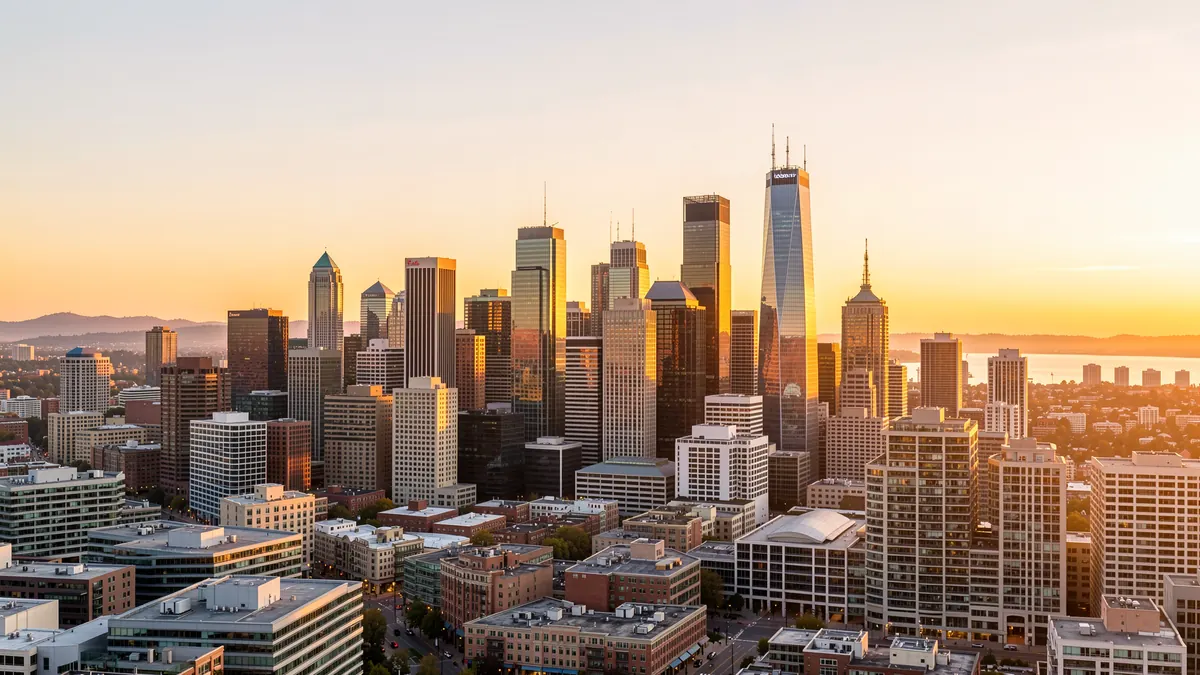
Seattle's Office of Labor Standards set the 2026 minimum wage at $21.30 an hour effective January 1, 2026, up from $20.76 in 2025, per seattle.gov. The headline change is structural: Seattle's old two-tier system, which let the smallest employers phase in at a lower rate, sunset at the end of 2025. In 2026 there is one rate for every employer regardless of headcount, and it rises with inflation each January 1. The rate covers every hour worked inside Seattle city limits.
Because Washington State law does not permit a tip credit, the mechanics are the simplest in the country: the employer pays the full $21.30 an hour in cash, and 100 percent of your tips land on top. There is no weekly top-up calculation to argue about, because tips were never counted toward the wage in the first place. A 40-hour week makes it concrete: the employer owes 40 × $21.30 = $852.00 in wages, guaranteed whether the house is slammed or empty. Keep $600 in tips across that week and your total is $1,452.00 — an effective $36.30 an hour. Run your own hours and tips through the server paycheck calculator to see your effective rate.
The comparison is the story. The same shift worked in most of the country rides on a $2.13 federal cash wage; across Lake Washington in Bellevue it rides on Washington's $17.13 state minimum. Seattle's $21.30 is the region's high-water mark for 2026 alongside its neighboring cities — the numbers line up like this:
Seattle vs. Washington vs. the federal rule
| Rule | Federal | Washington State (2026) | Seattle (2026) |
|---|---|---|---|
| Full minimum wage | $7.25 | $17.13 | $21.30 |
| Tipped cash wage | $2.13 | $17.13 — no tip credit | $21.30 — no tip credit |
| Maximum tip credit | $5.12 | None allowed | None allowed |
| Top-up when tips fall short | Required every workweek | Not applicable — full wage in cash | Not applicable — full wage in cash |
| Overtime basis | Full minimum — OT cash rate ≈ $5.76 | Full minimum — OT $25.70 | Full minimum — OT $31.95 |
| Tip pools | Employees only, never managers | Employees only, never managers | Employees only, never managers |
Every dollar figure in Seattle's column is guaranteed cash. Where a Texas server's floor is $217.50 on a 30-hour week — often mostly tips — a Seattle server's is $639.00, all of it on the paycheck. Tips change your total, never your floor.
What Seattle servers should watch
City limits are the line. The $21.30 attaches to hours worked inside Seattle. An employer with rooms in Seattle and Bellevue owes $21.30 for the Seattle hours and $17.13 for the Bellevue hours. If your schedule hops the city line, your pay stubs should show two rates — verify how your hours were coded with the Office of Labor Standards.
Overtime at $31.95. With no tip credit, overtime is simply 1.5 × $21.30 = $31.95 an hour in cash, plus tips. There is no lawful shortcut — an employer cannot recharacterize tips to discount the base. Price a double with the overtime calculator before you volunteer for one.
Service charges are not tips. Washington law (RCW 49.46.160) treats an automatic service charge — banquets, large parties, delivery fees — as the house's money unless the receipt or policy says otherwise, and it requires disclosure of what share reaches employees. Seattle's wage theft ordinance treats tips and service charges as wages owed when they are yours. Read the receipt language before counting that 22 percent line.
The January re-set. Seattle's rate is indexed to inflation and re-announced every fall, effective each January 1 — it moved from $20.76 to $21.30 for 2026. Neighboring cities move on their own schedules: Tukwila sits at $21.65, Renton tiers between $20.57 and $21.57, and SeaTac's airport-and-hotel rate is $20.74, per the state L&I local rates list. Compare them all on our city minimum wage hub.
Your real number. A $21.30 base with $25 an hour in tips is a $46-an-hour job — among the best floor-plus-tips combinations in the country. Compute effective hourly (wages plus kept tips, divided by hours) before comparing offers; the statewide background is in our Washington state breakdown.
FAQ
What is the tipped minimum wage in Seattle in 2026?
$21.30 an hour, effective January 1, 2026. Washington bans the tip credit, so that is the full cash wage every employer must pay — tips go on top, never toward it. Per Seattle's Office of Labor Standards.
Do small employers pay less in Seattle in 2026?
No. The old two-tier system ended on January 1, 2026. Every employer, regardless of size, pays the single $21.30 rate for hours worked in Seattle.
Can a Seattle employer count my tips toward the $21.30?
No. Washington state law does not allow a tip credit. The employer must pay the full minimum in cash; every tip you receive is on top of the $21.30.
How is overtime calculated for Seattle tipped workers?
At 1.5 times the full $21.30 rate, or $31.95 an hour in cash, plus your tips. Because there is no tip credit, there is no discounted overtime rate to argue about.
What rate applies if I work partly outside Seattle?
The Seattle rate covers hours worked inside city limits. Hours in a neighboring city fall under that city's rule — Washington's statewide $17.13 in Bellevue, for example. Track where the hours happen.
Are service charges the same as tips in Seattle?
No. Under Washington law, an automatic service charge is not a tip, and employers must disclose what portion of it goes to employees. Check the receipt language and the employer's policy before counting on it.